This is an example of a HTML caption with a link.

River Park - Sawangan, Airmadidi, Minahasa Utara

In this post i would like to share to you all about a place that located in Sawangan, Airmadidi, Minahasa Utara, that's River Park.
Same with name "River Park", this place was surrounded with a river and many park.
In this place we can find a pool, cottages, rooms, and many other.

You can visit this place because it's not far from North Sulawesi's Capital City, Manado.

I visited this place on November ago with my friends from University.

Before i leave this place, i've capture a few of them.

nice pool in the center of this resting area

with paving stone on the road

there's more beautiful view than it

sun is shining

we can found many palm trees arround this place

photo when we arrived in this place

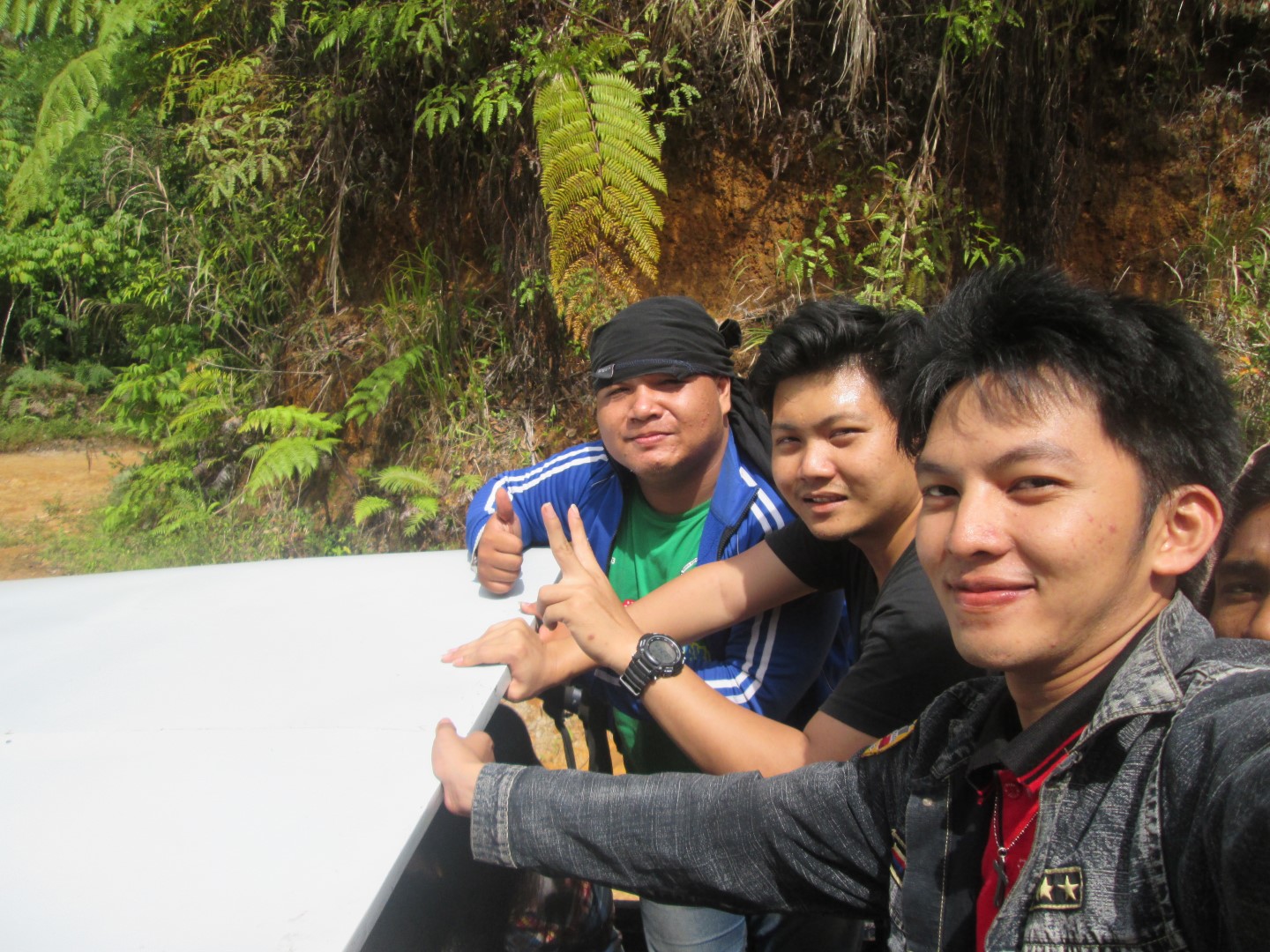
it's me with my friend
Hope you can enjoy to read this post, and before it i want to say sorry to you all because i've never update this blog for more than 1 year.
I hope with this post can make me more enjoy to write post here.


Travel in North Sulawesi

Travel agents in North Sulawesi will be happy to arrange ground and air transportation for you and your companions. Local guides will take you to the lush highlands, exotic rainforests, and nearby islands for trekking, hiking, and adventure. The list below will start you on your way . . .

travel


Safari Tours & Travel
Ph: (62) 431 857637
Fax:
Email: info@manadosafaris.com

and many more


TRAVEL in NORTH SULAWESI


TRAVELLING BY AIR

North Sulawesi is easily reachable by international & domestic flights. Sam Ratulangi International Airport, located 13 km from Manado serves not only as the basis to link Manado with Jakarta and other cities but also is the basis of transit to and from Palu - Balikpapan - Banjarmasin - Ternate - Ambon - Sorong - Biak - and Jayapura.

The smaller airports in the province handle domestic air travel. These smaller airports are located in Ternate, Gorontalo, Sangihe, and Talaud.

North Sulawesi is serviced by national and international carriers alike: Garuda Indonesia, Merpati Nusantara Airlines, Lion Air, Air Asia and Silk Air (the regional carrier of Singapore Airlines). Currently, Wings Air has flights from Davao City to Manado once a week, Silk Air has direct flights from Singapore to Manado four times weekly, and Air Asia offers direct connections from Kuala Lumpur, three times weekly.


TRAVELLING BY SEA

North Sulawesi can be accessed by sea. The port of Bitung has a large and modern wharf 1,127 m long, located on the northern coast is undoubtedly the most important port, serving shipping lines in North Sulawesi as well as the eastern part of Indonesia. This natural port, shielded by Lembeh Island, is one of the officially designated ports of entry and departure of tourists visiting Indonesia. Other ports in North Sulawesi are Manado, Melonguane, Lirung, Siau, Gorontalo, and Kwandang.

Shipping line in this province are served by P.T Pelni, a state owned shipping company, and private companies such as PT Holpers Line.


TRAVELLING BY ROAD

Intercity travel in North Sulawesi is quite easy particularly from Manado to Minahasa, Bitung, Bolaang Mongondow and Gorontalo.

Travel to and from North Sulawesi, by road, is an adventure. Long distance busses to Gorontalo, Palu, Poso (Central Sulawesi) and Ujung Pandang (South Sulawesi) are available. Trips to South Sulawesi may take several days.


LOCAL TRANSPORTATION

Local transportation is provided primarily by "Oplet/Mikrolet". These kinds of vehicles are used to provide city transportation for 7-14 passengers.

TAXI
Taxis are available in most municipalities. Always ask the driver to use the meter. Taxis are reasonable and can be a good alternative to the crowded Mikrolets of the city.

BENDI
The Bendi is the traditional cart pulled by a horse, and can seat up to four passengers. This is a definite must for first time adventuresome travelers. The inexpensive fare depends on the distance traveled.


Diving Info

No other DIVING locale in the world can surpass the splendor and breathtaking beauty of North Sulawesi's coral reefs. We invite you to join one of our safe, professional dive centers for an underwater expedition that you will never forget. Whether you are a novice, or an experienced diver with hundreds of dives, you will be astounded by the variety of species, and the sheer volume of living creatures that inhabit our crystal clear waters. Look below to find your personal guide about Diving Info...
diving


Manado

Blue Bay Divers

Ph: (62) 81 340 286000
Email: info@bluebaydivers.de


Celebes Divers
Ph: (62) 431 838877
Email: info@celebesdivers.com


Eco Divers
Ph: (62) 431 824445
Fax: (62) 431 823444
Email: info@eco-divers.com


Froggies Divers
Ph: (62) 812 430 1356
Fax: (1) 530 684 6038
Email: info@divefroggies.com


Gangga Island Resort
Ph: (62) 82 431 3809
Fax: (872) 7618 44716
Email: ganggais@indosat.net.id

Kungkungan Bay Resort
Ph: (62) 438 30300
Fax: (62) 438 31400
Email: info@divekbr.com


Living Colours Dive Resort
Ph: (62) 431 847064
Fax:
Email: info@livingcoloursdiving.com


LumbaLumba Diving
Ph: (62) 431 826 151 or 152
Fax:
Email: info@lumbalumbadiving.com


Thalassa Dive Center
Ph: (62) 431 850230
Fax: (62) 431 850231
Email: info@thalassa.net


Two Fish Divers
Ph: (62) 811 43 2805
Fax:
Email: info@twofishdivers.com


Enjoy your diving in North Sulawesi.


Kolintang

Kolintang (Indonesian Xylophone) is originated a culture of Minahasa, a regency in North Sulawesi . It is similar to a wooden xylophone and is popular nationwide as the traditional music instrument from North Sulawesi. Based on one version of local folklore, name of Kolintang came from the sound: TING (high pitch note) and TANG (moderate pitch note), TONG (low pitch note). In the local language, the invitation "Let us do some TING TANG TONG" is: "mangemo kumolintang", hence the name of the instrument, KOLINTANG.

kolintang
In its early days, Kolintang originally consisted of only a series of wooden bars placed side by side in a row on the legs of the players who would sit on the floor with both of their legs stretched out in front of them. Later on, the function of the legs was replaced either by two poles of banana trunk or by a rope which hung them up to a wooden plank. Story says that resonance box was beginning to be attached to this instrument after Diponegoro, a prince from Java who was exiled to Minahasa, brought along the Javanese instrument Gamelan with its resonance box, Gambang.
Kolintang had a close relationship with the traditional belief of North Sulawesi’s natives and as their culture, It was usually played in ancestor worshipping rituals. That might explain the reason why Kolintang was nearly totally left behind when Christianity came to North Sulawesi. It was so rarely played that it was nearly extinct for about a 100 year since then. It only reappeared after the World War II, pioneered by the blind musician Nelwan Katuuk, who reconstructed it according to universal musical scales. Initially, there was only one kind of Kolintang instrument which was a 2 octave diatonical melody instrument. It was usually played with other string instruments such as guitar, ukulele or string bass as accompaniment.
Kolintang is played by various peoplein North Sulawesi who still love their culture, from High School Students until the adult one. It is also played in various events, from exhibitions in a mall and building until governmental events.
kolintang


Maengket Dance

Maengket is a dance drama as a culture from North Sulawesi. Formerly, it used at Traditional Ceremony, as a joyful expression when the people successed in rice harvest at many years ago. The dance is often performed on important occasions welcoming prominent visitors, as a prelude to competitions, or during local festivals. Maengket is accompanied by spirited harmonic songs in the form of Minahasan communal work.
This kind of North Sulawesi’s culture actually a variety of modernized and secularized dances consisting of three parts, Makamberu depicting the harvest time and in some parts of its choreography tell about romantic love poems; Marambak celebrating the building of a new house and passing on traditional values; Mah'laya is usually humorous and is generally full of merriment. Maengket DanceMaengket is a traditional dance that originated from Minahasa (Manado), where since time immemorial to this day is still growing. Maengket Dance already in the ground since the people of Minahasa known mainly grow rice farming in the fields. At the time of Minahasa Ancestors People, dance maengket played only at the time of rice harvest with movements that only modest. But in today's dance has been developed especially maengket and tarinya form without leaving their authenticity, especially the poem / song literature